

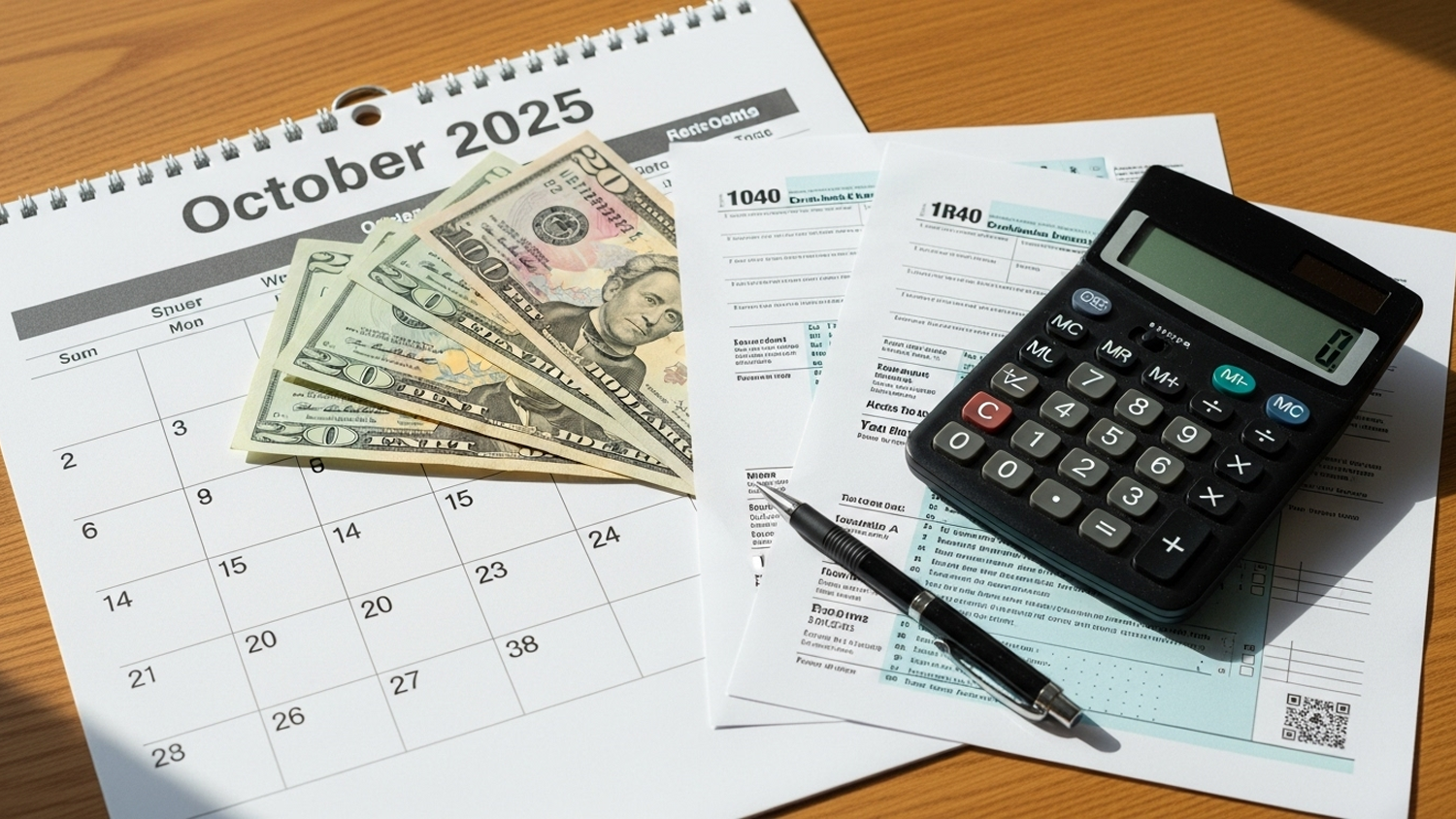
The One Big Beautiful Bill Act (OBBB), signed into law in July 2025, marks a major shift in U.S. tax policy. The legislation seeks to simplify the federal tax code while offering targeted relief to individuals and small businesses.
Since its passage, the OBBB has remained a dynamic framework for tax reform. Lawmakers continue to fine-tune its provisions to align with evolving economic conditions and fiscal priorities.
In its latest update, three new temporary deductions were introduced, effective from 2025 through 2028. The measures aim to stimulate consumer spending, encourage business growth, and provide short-term financial relief to working families.
3 Biggest New Deductions
The OBBB adjustments this time focus on providing relief to middle-income taxpayers through three major new deductions:
- No Tax on Tips – You can deduct up to $25,000 in reported tips, with the benefit phasing out if your joint adjusted gross income (AGI) exceeds $300,000.
- No Tax on Overtime – You may deduct up to $25,000 in overtime pay, also phasing out for joint filers earning over $300,000 AGI.
- New Deduction for U.S.-Assembled Car Loan Interest – You can deduct up to $10,000 of interest paid on qualifying new car loans, phasing out for joint filers above $200,000 AGI
Good news for taxpayers: These deductions apply even to those claiming the standard deduction, extending new tax relief to millions who previously could not itemize (source: IRS: 2025 “One Big Beautiful Bill” Tax Deductions for Workers and Seniors).
What Changed Under the OBBB
Loading..........
The Data is Not Available
Workers Gain Tax Relief Under the OBBB Act
Here are more details about the new OBBB tax deductions:
Tax Relief for Tipped Workers
If you work in a tipped job, you can now deduct up to $25,000 in qualified tips reported to the IRS. This deduction offers direct relief for service professionals like bartenders, restaurant staff, and salon workers. The benefit phases out if you earn above $150,000 (single) or $300,000 (joint), helping you keep more of what you earn in gratuities.
Tax Relief for Hourly Workers
If you earn overtime pay, you can now deduct up to $12,500, or $25,000 if you file jointly, in qualified overtime wages. This change helps you reduce the taxable share of your extra hours, giving you more take-home pay, especially if you work in fields like healthcare, logistics, or manufacturing.
Targeted Relief for Car Buyers and Seniors
New provisions offer practical savings: buyers of U.S. made vehicles can deduct part of their loan interest, while seniors receive a larger deduction to ease living expenses.
1. New Car Loan Interest Deduction
If you finance a personal vehicle between 2025 and 2028, you can deduct up to $10,000 in loan interest each year with no need to itemize. It’s an above-the-line deduction that gives you real savings fast (source: The Tax Adviser: IRS Draft Schedule 1-A for 2025 Deductions).
Key Conditions:
- You must begin the loan after December 31, 2024.
- You must buy a new personal vehicle; you will not qualify for a used car or a lease.
- You must select a vehicle finally assembled in the United States.
Income Limits: The deduction starts to phase out for single filers with an income of over $100,000 ($200,000 for joint filers).
2. Significant Additional Deduction for Seniors
If you’re 65 or older, you can claim an extra deduction of $6,000 if you file alone or $12,000 if you file jointly on top of the standard senior deduction. It helps lower your taxable income, though the benefit starts to phase out if you earn over $75,000 (single) or $150,000 (joint).
What This Means for Your Tax Planning Now
The new tax rules favor workers and retirees who plan early. Keep detailed records of your income, expenses, and loan interest throughout the year to maximize deductions and avoid compliance issues when filing your 2025 return.
Get Expert Help to Maximize Your New Tax Breaks
Many taxpayers may miss these newly introduced tax breaks or struggle to claim. Don’t risk losing valuable savings. Legend Fusions simplifies the process. Our experts identify every deduction you qualify for, calculate your exact 2025 savings, and help you access them faster. We also provide a clear, year-round plan to protect and maximize your savings.

Hira Asif
Hira Asif, Client Manager (US) at Legend Fusions, brings over 11 years of tax expertise, including 8 years with Ernst & Young. Her work focuses on tax advisory, compliance, and planning for individuals, partnerships, and private equity funds. With a deep knowledge of federal, state, and local tax regulations, Hira is skilled in identifying tax planning opportunities and reviewing corporate and partnership tax returns to optimize compliance and reduce exposures.